 +44 7856 312948
 support@editgardnercoaching.com





Why Your Debilitating Period Pain Is Not Random
If your period pain shows up in the same window every month, your body is not failing you.
It is following a pattern.
Many women live with debilitating period pain while being told it is normal, something to endure, or something they should simply manage better. Over time, this creates anxiety, self-doubt and exhaustion, especially when the pain disrupts work, relationships and daily functioning.
Most important: your symptoms are not random.
They are shaped by predictable biological processes that respond to hormones, inflammation, stress and lifestyle inputs. When patterns exist, understanding becomes possible. When understanding exists, change becomes realistic.
Does your period still stop you from functioning for a few days each month?
Do you feel like you have tried everything, yet still do not understand why this keeps happening?
Let us bring clarity.
Debilitating period pain follows biological patterns, not chance
Severe period pain is most commonly classified as primary dysmenorrhea when it occurs without an identified pelvic condition. However, “primary” does not mean unexplained or imaginary.
Clinical guidance confirms that primary dysmenorrhea is driven by cyclical biological mechanisms, particularly excess prostaglandin production, uterine hypercontractility and inflammatory processes linked to ovulatory cycles (Burnett, 2025; Iacovides et al., 2015).
This is why pain tends to:
- Appear in predictable phases of the cycle
- Peak just before or during menstruation
- Recur even when life circumstances change
Your body is not being inconsistent.
It is responding consistently to internal signals.
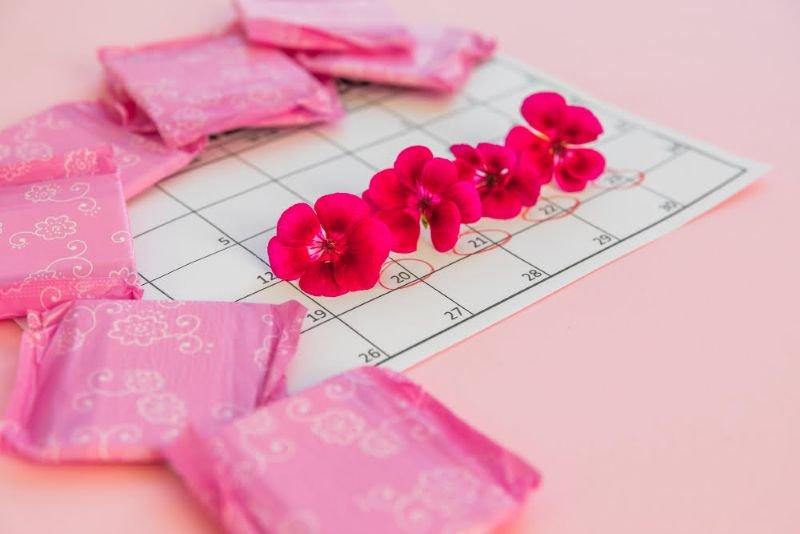
Why your pain often peaks at the same times each month
If your pain intensifies in the days before bleeding or during the first days of your period, this timing matters.
Menstruation is an inflammatory event. Prostaglandins rise to help the uterus contract and shed its lining. In some women, prostaglandin levels are higher, leading to stronger contractions, reduced blood flow and increased pain sensitivity (Iacovides et al., 2015).
Clinical guidelines confirm that this process is cyclical and predictable, not sporadic (Burnett, 2025).
Importantly, research shows that patterns of dysmenorrhea over time carry meaning. A large cross-sectional study found that women with early-onset, severe and persistent menstrual pain patterns had a higher likelihood of later endometriosis (Dai et al., 2023).
This does not mean every woman with pain has endometriosis.
It does mean recurring patterns should be taken seriously.
How hormones, inflammation and the nervous system amplify pain
Pain is not produced by one system alone.
It emerges from interaction.
Hormonal fluctuations influence inflammation, and inflammation affects pain perception. A systematic review found that women with primary dysmenorrhea show markers of increased oxidative stress, supporting the role of inflammatory pathways in menstrual pain (Szmidt et al., 2020).
At the same time, the nervous system plays a role. Stress hormones interact with reproductive hormones, altering pain thresholds and emotional resilience. Clinical reviews describe dysmenorrhea as a biopsychosocial condition, shaped by both physiological and stress-related modulation (Iacovides et al., 2015).
This explains a common experience:
- Stress worsens period pain
- Pain then increases stress
Your nervous system is not overreacting.
It is responding to cumulative load.
Why lifestyle factors shape menstrual pain patterns
Lifestyle does not cause dysmenorrhea in isolation, but it can influence severity.
A large cross-sectional study found that dietary habits were associated with menstrual problems, including pain severity. Lower intake of fruits and vegetables and irregular eating patterns were linked to more reported symptoms (Barcın Güzeldere et al., 2024).
Similarly, menstrual pain severity has been associated with nutritional intake, sleep habits and physical activity levels, suggesting that pain reflects overall physiological stress rather than a single trigger (Naraoka et al., 2023).
These findings do not assign blame.
They explain why pain patterns can intensify during demanding periods of life.

Why trial-and-error coping increases distress
Many women are left to manage menstrual pain alone.
A qualitative study exploring how students cope with dysmenorrhea found widespread normalisation of severe pain, frequent medical dismissal and reliance on trial-and-error strategies. Participants reported frustration, helplessness and a lack of structured guidance (Ní Chéileachair et al., 2022).
When symptoms repeat without explanation, uncertainty becomes distressing.
Clarity reduces anxiety. Structure restores agency.
Why your body is responding logically, not betraying you
Pain is information.
It is not a character flaw or a failure of will.
NHS guidance makes clear that while period pain is common, severe pain that interferes with daily life is not something to ignore, and persistent symptoms warrant proper attention (NHS, 2023a; NHS, 2023c).
When pain follows patterns, your body is communicating consistently.
Listening does not mean medicalising yourself. It means understanding your signals.
Patterns create predictability, and predictability creates choice
When you can anticipate when symptoms worsen, you gain leverage.
Mapping your cycle can reveal:
- When pain escalates
- How stress, sleep and workload interact with symptoms
- Which phases require more support
You do not need to diagnose yourself.
You need visibility.
👉 Download the free 7-Step Hidden Triggers Checklist to start identifying what may be quietly fuelling your pain patterns.
What you can do right now to start regaining control
You do not need to fix everything at once.
Small, grounded actions create clarity, and clarity reduces anxiety.
Here are a few things you can start this week, without buying anything or changing your entire life.
Start with hydration – because inflammation needs fluid balance
Adequate hydration supports circulation, cellular function and waste removal, all of which matter when inflammation is present.
Aim for around 2 litres of clean water per day, spread evenly across the day, rather than drinking large amounts at once. When hydration is low, blood flow and tissue oxygenation can be affected, which may worsen cramping and fatigue.
This is not a cure.
It is a baseline support your body needs to function properly.
If 2 litres feels like too much, start where you are and build gradually.
Track your cycle using what you already have
You do not need a fancy or expensive app to understand your patterns.
Your calendar is enough.
Simply note:
- The first day of bleeding
- When pain starts and ends
- Days when energy drops or mood shifts
Over time, patterns emerge.
Those patterns are information.
Cycle tracking turns vague suffering into something observable and therefore workable.
Track mood, energy and food without judgement
Menstrual pain rarely exists in isolation.
Alongside your cycle, briefly note:
- Mood changes
- Energy levels
- Sleep quality
- What you ate, at a general level
You are not looking for perfection or rules.
You are looking for connections.
For many women, this is the moment they realise their body has been trying to communicate all along.
Ask for help instead of doing this alone
Trying to solve persistent pain on your own often leads to trial-and-error fatigue.
Support creates structure.
If you want guidance:
- You can book a free Hormonal Health Assessment call with me to talk through your patterns and next steps
- Or, if you prefer to research in your own time, you can download my free guide to understand what may be silently fuelling your period pain
👉 Download the free 7-Step Hidden Triggers Checklist and take back control.
Asking for help is not weakness.
It is a rational response to a complex problem.

Frequently asked questions
Is debilitating period pain normal?
It is common, but it is not inevitable. Clinical guidance recognises that severe pain deserves assessment and explanation, not dismissal (Burnett, 2025; NHS, 2023a).
When should period pain be investigated further?
Pain that is severe, worsening, long-standing or resistant to usual management should be explored further, particularly when it follows consistent patterns (Dai et al., 2023; NHS, 2023c).
Can non-medical approaches help reduce pain?
Evidence suggests lifestyle, stress and nutritional factors can influence symptom severity, although they work best when applied with structure rather than guesswork (Barcın Güzeldere et al., 2024; Ní Chéileachair et al., 2022).
Your symptoms are not random, and that changes everything
Your pain has patterns.
Patterns mean predictability.
Predictability means change is possible.
You are not broken. Your body is responding logically to hormonal, inflammatory and nervous system signals shaped by your life context.
If you want help mapping your pattern and understanding what your body needs, that is exactly what I do with women on clarity calls.
👉 Book a free Hormonal Health Assessment Call and take the next step with understanding, not fear.
References
Burnett, M. (2025). Guideline No. 345: Primary dysmenorrhea. Journal of Obstetrics and Gynaecology Canada, 47(5), Article 102840. https://www.sciencedirect.com/science/article/abs/pii/S1701216325000805
Barcın Güzeldere, H.K. et al. (2024). The relationship between dietary habits and menstruation problems in women. BMC Women’s Health, 24, 397. https://link.springer.com/article/10.1186/s12905-024-03235-4
Dai, Y. et al. (2023). Association between dysmenorrhea patterns and risk of adult endometriosis. Frontiers in Reproductive Health, 5, 1121515. https://www.frontiersin.org/journals/reproductive-health/articles/10.3389/frph.2023.1121515/full
Naraoka, Y. et al. (2023). Severity of menstrual pain and lifestyle habits. Healthcare, 11(9), 1289.
https://pubmed.ncbi.nlm.nih.gov/37174831/
Ní Chéileachair, F. et al. (2022). Coping with dysmenorrhea. BMC Women’s Health, 22, 407.
https://bmcwomenshealth.biomedcentral.com/articles/10.1186/s12905-022-01988-4
Szmidt, M.K. et al. (2020). Oxidative stress and primary dysmenorrhea. Antioxidants, 9(10), 994.
https://www.mdpi.com/2076-3921/9/10/994
NHS (2023a). Period pain.
https://www.nhs.uk/conditions/period-pain/
NHS (2023b). Pre-menstrual syndrome (PMS).
https://www.nhs.uk/conditions/pre-menstrual-syndrome/
NHS (2023c). Endometriosis.
https://www.nhs.uk/conditions/endometriosis/