 +44 7856 312948
 support@editgardnercoaching.com





Inflammation and Period Pain: What the Research Shows and What You Can Do
If Inflammation Builds Quietly, What Happens During Your Period?
In Part 1, we explored how chronic inflammation develops gradually long before symptoms explode. Now the question becomes more specific.
How does inflammation connect directly to period pain?
If your menstrual pain has worsened over time, if your PMS feels more intense, or if fatigue now accompanies your cycle, you are not imagining it. Research increasingly shows that inflammation and period pain are biologically linked.
Understanding that link shifts the focus from random suffering to measurable mechanisms. And that changes how we approach relief.
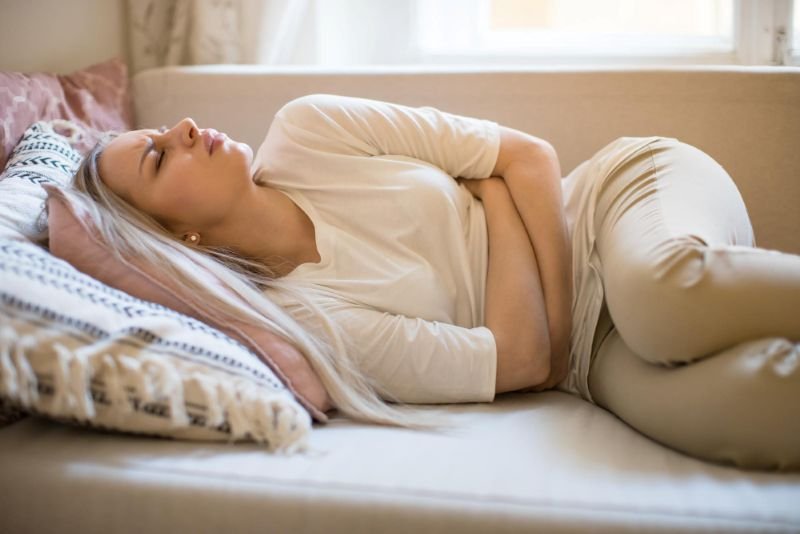
Inflammation and Period Pain: The Biological Link
Period pain is not simply “bad luck”. It involves biochemical signalling.
Women with primary dysmenorrhoea show elevated inflammatory markers compared with women without menstrual pain (Barcikowska et al., 2020). These markers include substances involved in inflammatory pathways that increase uterine contractions and pain sensitivity.
Inflammatory Mediators
Pro inflammatory mediators stimulate stronger uterine contractions. Stronger contractions reduce blood flow temporarily. Reduced blood flow increases pain.
This is not psychological. It is physiological.
Oxidative Stress and Pain Amplification
Oxidative stress is another contributor. Barcikowska et al. (2020) highlight altered inflammatory and oxidative balance in women with dysmenorrhoea.
When oxidative stress increases, tissue sensitivity increases. Consequently, pain perception intensifies.
Lifestyle Patterns and Pain Severity
Menstrual pain severity is associated with nutritional intake and lifestyle habits (Naraoka et al., 2023). Furthermore, dietary patterns correlate with menstruation problems in cross sectional research (Barcın Güzeldere et al., 2024).
This does not mean blame. It means influence.
The NHS confirms that period pain is common, but it also states that severe or worsening pain that disrupts daily life warrants assessment (NHS, 2023). Therefore, inflammation and period pain should not be dismissed when symptoms escalate.
So ask yourself: has your pain changed gradually over the years?
If so, it may reflect cumulative inflammatory load.
What Modern Life Adds to the Inflammatory Load
Chronic inflammation causes rarely stem from one single factor. They accumulate through modern patterns.
Ultra Processed Foods
Ultra processed food consumption is associated with markers of low grade inflammation (Asensi et al., 2023). Highly refined dietary patterns may therefore increase inflammatory signalling.
Does this mean one takeaway causes pain? No. It means repeated patterns matter.
Overall Diet Composition
Diet composition influences inflammatory status (Minihane et al., 2015). Diets rich in fibre, healthy fats and phytonutrients are associated with lower inflammatory markers.
Conversely, pro inflammatory dietary patterns elevate inflammatory mediators (Giugliano et al., 2006). Therefore, food quality influences immune activity.
Sleep Disruption
Sleep disruption amplifies inflammatory pathways. Even partial sleep restriction increases inflammatory signalling (Irwin, 2015).
If you regularly sleep less than your body requires, your inflammatory baseline may gradually rise.
Have you noticed that period pain feels worse after stressful or sleep deprived weeks?
That pattern is biologically plausible.
Can Inflammation Be Reduced? What Intervention Studies Show
Inflammation is not fixed. It responds to sustained input changes.
Large intervention trials demonstrate that Mediterranean style dietary patterns reduce inflammatory markers and improve long term outcomes (Estruch et al., 2018).
Minihane et al. (2015) emphasise that dietary composition influences low grade inflammation through multiple pathways, including gut microbiota and lipid metabolism.
What does this mean practically?
It means consistent shifts in dietary pattern, sleep and stress management may gradually lower inflammatory signalling.
It does not mean perfection. It means direction.
Small changes compound because the immune system recalibrates over time.
👉 Download the free 7 Step Hidden Triggers Checklist
When Period Pain Needs Medical Assessment
Not all period pain is purely inflammatory.
The NHS advises seeking medical advice if:
- Pain prevents normal daily activities
- Pain worsens progressively
- Bleeding is unusually heavy
- Symptoms change significantly
Inflammation and period pain can coexist with other conditions such as endometriosis. Therefore, self education should always sit alongside appropriate medical evaluation.
Understanding inflammation empowers you. Ignoring severe symptoms does not.
Inflammation Is Dynamic, Not Permanent
Inflammation responds to repeated signals. Therefore, it can also respond to repeated supportive inputs.
Chronic inflammation causes often build quietly. However, small, consistent changes in diet, sleep and stress patterns can gradually shift inflammatory baseline.
Instead of asking, “Why is my body attacking me?” ask, “What inputs has my body been responding to?”
That question replaces fear with curiosity.
If you are ready to explore what may be silently fuelling your period pain, grab your free period pain triggers checklist here.
Frequently Asked Questions
Is inflammation the only cause of period pain?
No. Period pain has multiple contributors. However, inflammatory mediators and oxidative stress play measurable roles in dysmenorrhoea (Barcikowska et al., 2020).
How long does it take to reduce inflammation?
Inflammatory markers respond gradually to sustained changes in diet and sleep patterns. Intervention studies show improvements over months rather than days (Estruch et al., 2018).
Can stress alone increase period pain?
Stress influences sleep and immune signalling. Because sleep disruption increases inflammatory cytokines (Irwin, 2015), chronic stress may indirectly amplify pain sensitivity.
Continue Exploring the Root Causes
If you have not yet read Part 1, start there. Understanding how chronic inflammation develops quietly across the lifespan provides essential context for menstrual pain.
Together, these two articles form a clearer picture: inflammation builds gradually, responds to inputs and interacts with hormonal biology.
And most important, you are not powerless in that process.
Need Help Understanding Your Pain Patterns?
If you are starting to recognise your own story in this research, you do not have to figure it out alone.
Every woman’s inflammatory load and hormonal profile is different. That is why guessing rarely works long term.
If you would like clarity on your personal pain patterns, book a free Hormonal Health Assessment call.
We will look at your symptoms, lifestyle inputs and cycle history together, and map out what may be driving your inflammation.
Book your free call here.
References
Asensi, M.T., Napoletano, A., Sofi, F. and Dinu, M. (2023) ‘Low-grade inflammation and ultra-processed foods consumption: A review’, Nutrients, 15(6), 1546. Available at: https://pubmed.ncbi.nlm.nih.gov/36986276/ (Accessed: 09 Feb 2026).
Barcikowska, Z., Rajkowska-Labon, E., Grzybowska, M.E., Hansdorfer-Korzon, R. and Zorena, K. (2020) ‘Inflammatory markers in dysmenorrhea and therapeutic options’, International Journal of Environmental Research and Public Health, 17(4), 1191. Available at: https://pmc.ncbi.nlm.nih.gov/articles/PMC7068519/ (Accessed: 1 August 2025).
Barcın Güzeldere, H.K., Efendioğlu, E.H., Mutlu, S., Esen, H.N., Karaca, G.N. and Çağırdar, B. (2024) ‘The relationship between dietary habits and menstruation problems in women: a cross-sectional study’, BMC Women’s Health, 24, p. 397. Available at: https://bmcwomenshealth.biomedcentral.com/articles/10.1186/s12905-024-03235-4 (Accessed 21 May 2025).
Estruch, R., Ros, E., Salas-Salvadó, J., Covas, M.I., Corella, D., Arós, F., Gómez-Gracia, E., Ruiz-Gutiérrez, V., Fiol, M., Lapetra, J., Lamuela-Raventós, R.M., Serra-Majem, L., Pintó, X., Basora, J., Muñoz, M.A., Sorlí, J.V., Martínez, J.A., Fitó, M., Gea, A., Hernán, M.A. and Martínez-González, M.A. (2018) ‘Primary prevention of cardiovascular disease with a Mediterranean diet supplemented with extra-virgin olive oil or nuts’, New England Journal of Medicine, 378(25), e34. Available at: https://pubmed.ncbi.nlm.nih.gov/29897866/ (Accessed: 12 Feb 2026).
Furman, D., Campisi, J., Verdin, E., Carrera-Bastos, P., Targ, S., Franceschi, C., Ferrucci, L., Gilroy, D.W., Fasano, A., Miller, G.W., Miller, A.H., Mantovani, A., Weyand, C.M., Barzilai, N., Goronzy, J.J. and Rando, T.A. (2019) ‘Chronic inflammation in the etiology of disease across the life span’, Nature Medicine, 25(12), pp. 1822–1832. Available at: https://www.nature.com/articles/s41591-019-0675-0 (Accessed: 12 Feb 2026).
Giugliano, D., Ceriello, A. and Esposito, K. (2006) ‘The effects of diet on inflammation’, Journal of the American College of Cardiology, 48(4), pp. 677–685. Available at: https://pubmed.ncbi.nlm.nih.gov/16904534/ (Accessed: 12 Feb 2026).
Irwin, M.R. (2015) ‘Why sleep is important for health: a psychoneuroimmunology perspective’, Annual Review of Psychology, 66, pp. 143–172. Available at: https://www.annualreviews.org/content/journals/10.1146/annurev-psych-010213-115205 (Accessed: 16 Feb 2026).
Minihane, A.M., Vinoy, S., Russell, W.R., Baka, A., Roche, H.M., Tuohy, K.M., Teeling, J.L., Blaak, E.E., Fenech, M., Vauzour, D., McArdle, H.J., Kremer, B.H.A., Sterkman, L., Vafeiadou, K., Massi Benedetti, M., Williams, C.M. and Calder, P.C. (2015) ‘Low-grade inflammation, diet composition and health: current research evidence and its translation’, British Journal of Nutrition, 114(7), pp. 999–1012. Available at: https://pmc.ncbi.nlm.nih.gov/articles/PMC4579563/ (Accessed 09 Feb 2026).
Naraoka, Y., Hosokawa, M., Minato-Inokawa, S. and Sato, Y. (2023) ‘Severity of menstrual pain is associated with nutritional intake and lifestyle habits’, Healthcare, 11(9), p. 1289. Available at: https://pubmed.ncbi.nlm.nih.gov/37174831/ (Accessed 21 May 2025).
NHS (2023) Period pain. Available at: https://www.nhs.uk/conditions/period-pain/ (Accessed: 23 April 2025).